



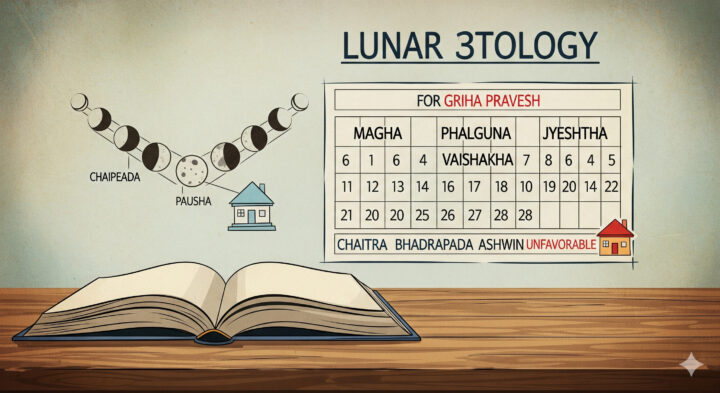
In the Vedic tradition, some months of the year are considered auspicious for Graha Pravesh by nature—these include Magh, Phalguna, Vaishakha, and Jyeshtha; in these months, the chances of domestic happiness, wealth, and stability increase. On the contrary, it is considered classically correct to avoid Pravesh in the Chaturmas (Ashadha, Shravana, Bhadrapada, Ashwin) and Pausha months because there is a tradition of postponing auspicious works during these periods.
Month-wise traditional indications
- Magh (January–February): Chances of increase in wealth increase; there is happiness in the household.
- Phalguna (February–March): It is considered to be a sign of happiness and prosperity of children.
- Vaishakha (April–May): Sign of Lakshmi, stability in the house, auspiciousness, and increase in the flow of capital.
- Jyeshtha (May–June): Results like stability, livestock/resource security—considered auspicious in rural culture.
- Kartik, Margashirsha: Moderate results; decided as per local tradition and horoscope.
- Ashadha, Shravana, Bhadrapada, Ashwin, Pausha: It is advisable to avoid Griha Pravesh in these months.
Months/periods to avoid
- Chaturmas: Auspicious activities are generally prohibited from Ashadha to Ashwin.
- Pausha: Many traditions advise against entering in this month.
- Additional prohibition period: Entry in phases like Shraadh Paksha and Adhik Maas/Kharmas is considered better to be avoided.
Shubh Tithi and Nakshatra (Saar)
- Tithi: Shukla Paksha Dwitiya, Tritiya, Panchami, Saptami, Dashami, Ekadashi, Dwadashi, and Trayodashi preferred; avoid Amavasya and dates like 4/9/14/30—check the local Panchang to make the final decision.
- Nakshatras: Rohini, Mrigashirsha, Uttara Phalguni, Chitra, Revati, Uttara Ashadha, and Uttara Bhadrapada are considered auspicious.
- Days: Thursday, Friday, and Sunday are generally favourable; there is a tradition of avoiding Tuesday in many places—check family tradition.
Festival-based indications
Festivals like Akshaya Tritiya, Gudi Padwa, Vasant Panchami, and Dussehra are considered extremely auspicious for house-warming or property-starting because the divine energy of these days creates the possibility of stability and growth in work. Especially on Akshaya Tritiya, the combination of Rohini Nakshatra at the time of house-warming/purchase further strengthens the auspicious results; in 2025, this festival fell on 30 April, and detailed Muhurta was found for house-warming during the day—that is, the tradition is still alive and relevant.
Practical trends of recent years
Many almanacs and portals show more Muhurats for Graha Pravesh in March to June and then in October–November—this matches the classical indications mentioned above. Generally, there are fewer or no Muhurats in July–September, as the Chaturmas prevails.
Is the month alone enough?
Not just the month—the family horoscopes, the house map, the main door direction, the pre-sanctification of the plot (whether the Bhoomi Pujan was done or not), and the pre-entry Vastu Shanti—all these are taken into consideration to decide the Muhurat. For example, the same Vaishakha may suggest different hours in different cities; hence, the local almanac and individual factors have to be read together.
Quick checklist
- Choose favourable dates of Shukla Paksha; avoid Rahukaal; look for auspicious Lagna and Nakshatra.
- Do not enter on Tuesdays, Amavasya, and prohibited months/Shraddha/Adhik Maas—if necessary, postpone the transfer; do the Puja later.
- Give preference to festival coincidences (Akshaya Tritiya, Dussehra, Vasant Panchami, Gudi Padwa); city-wise Muhurat will change, so refer to local timings.
Example: Trends in 2025–26
Griha Pravesh Muhurat in July–September 2025 appears limited/unavailable—this is Chaturmas compatible. Many dates were found in March–June and then October–November; emphasis was on constellations like Rohini, Uttara Phalguni, and Uttara Bhadrapada.
Conclusion: How to decide now?
Simple thing—choose months like Magh, Phalguna, Vaishakha, and Jyeshtha for Griha Pravesh; avoid Chaturmas and Pausha; and consider festival coincidences as a bonus. But the real game is not the month, but the subtle matching of the family and home’s birth-charts, direction-sthapana, constellation-lay, and local Panchang—this is where 10+ years of experience comes in handy; the Muhurta may be “visible,” but the subtle defects remain invisible, and they affect the peace and happiness in the future. So don’t delay the matter—book a personal consultation today; by combining the city, horoscope, map, and available dates, a Muhurta will be found that is not just formally auspicious but is functionally powerful for the long-term progress of the house.