



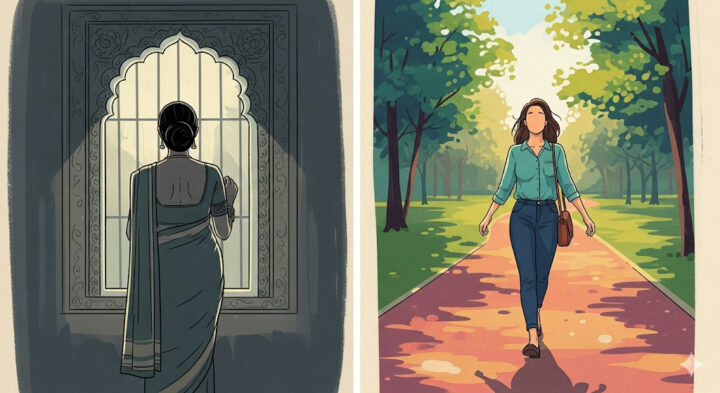
Imagine this. You are sitting at the dining table, the laughter feels forced, and the silence is heavy with unspoken words. Your heart feels a constant ache, a knowing that the sacred bond of marriage has frayed beyond repair. But the thought of speaking up is paralysed. “Log kya kahenge?” What will people say? This fear, this weight of divorce stigma in Indian families, is a reality countless women face. It stands in stark contrast to the relative acceptance in the West, creating a unique and painful impact on women caught in between.
From a societal lens, it’s a crisis. But from the compassionate eyes of Vedic astrology, or Jyotish, it’s a significant karmic crossroads. It’s not a mark of failure, but a powerful, albeit difficult, turning point written in the stars. This isn’t about blaming the planets. It’s about understanding their language to find your strength and navigate this path with wisdom.
The Vedic Blueprint: Your 7th House of Partnership
In your birth chart, the 7th house is the home of marriage, partnerships, and all one-to-one relationships. It’s a Dharmasthana—a house of duty and purpose. Planets placed here, and the planets influencing it, define the nature of your marital life.
- Venus (Shukra): The planet of love, beauty, and harmony. A strong, well-placed Venus blesses a relationship with understanding and affection.
- Jupiter (Guru): The planet of wisdom, expansion, and the husband figure in a traditional chart. Jupiter here brings morality and growth to the union.
- Mars (Mangal): The planet of energy, aggression, and conflict. Its challenging placement can create friction, often misunderstood solely as Mangal Dosha.
The Roots of Stigma: A Karmic Society’s Fear
When major planetary periods (Dashas) and transits (Gochara) affect this house and its lord, they can trigger events related to marriage. A difficult transit might not “cause” a divorce stigma in India, but it can illuminate the inherent challenges in the partnership, forcing a choice between enduring suffering or seeking liberation.
Why is the divorce stigma in Indian families so profound? Jyotish offers a karmic perspective. Indian society, deeply rooted in tradition, views marriage as a sacred social and spiritual contract, a core part of one’s Dharma. The stability of the 7th house is seen as vital for the entire family’s social and spiritual order.
This creates immense societal pressure on women to uphold this structure, often at the cost of their own psychological well-being. An overly rigid or afflicted Jupiter in the collective consciousness can breed judgment instead of wisdom. There’s a very real fear of social shame and gossip, concerns about family honour, and the harsh reality of divorced women discrimination. This is the shadow side of a system that prioritizes collective duty over individual peace.
The Western Lens: A Different Planetary Priority
The acceptance in the West stems from a different astrological focus. Modern Western society often emphasizes the 1st House—the House of Self. The planets governing individual identity and happiness (like the Sun and Uranus, the planet of revolution) are given more weight than the structures of Saturn (duty) or Jupiter (tradition).
Breaking free from an unhappy structure is often seen as an act of self-evolution, not a failure of duty. This cultural difference significantly reduces the social exclusion felt by individuals, leading to a different impact on women, one that is often more supportive financially and emotionally during the mental health after divorce phase.
The Impact on Women: Reading a Chart in Transition
So, what is the real divorce stigma in Indian families vs acceptance in west impact on women? For an Indian woman, the planets show a multi-layered challenge.
- The Mind (Moon): The Moon, representing your mind and emotions, can be severely afflicted during this time. This mirrors the anxiety, depression, and fear of the future that many experience.
- Security (Venus): Venus, your sense of comfort and love, is shaken. The feeling of being unloved or losing security is profound.
- Transformation (8th House): Divorce is an 8th house event—the house of crisis, transformation, and your partner’s resources. This directly links to the economic costs for women and the risk of poverty post-divorce that is a terrifying reality for many.
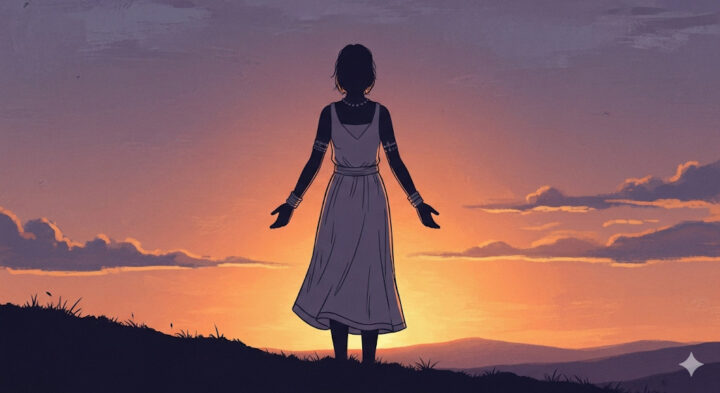
But here is the key insight: your chart also holds the remedies. The strength of your Ascendant (Lagna) and its lord determines your resilience. A strong Jupiter in the 9th house can grant you the wisdom to see beyond the current pain. A powerful Mercury can indicate the ability to build a new career. The chart doesn’t just show the problem; it reveals your unique path to healing.
Navigating the Storm: Dharma, Karma, and Free Will
Jyotish is not about passive prediction. It’s about empowered action—Purushartha (human effort) working with Daiva (destiny). So, what can you do?
- Planetary Remedies (Upayas): For a troubled Venus, simple acts of self-love and wearing white on Fridays can be soothing. For calming a restless mind (Moon), meditation and chanting can offer immense peace.
- The Ultimate Remedy is You: The most powerful transit is the one you initiate. Seeking therapy is a act of Purushartha. Building a financial plan is a act of Purushartha. Leaning on a small, trusted friend is a act of Purushartha. These conscious actions have the power to override difficult planetary periods.
Your value is not defined by your marital status. It is defined by the light of your own soul (Atman). This difficult transition, seen through the lens of karma, can be the catalyst for a more authentic and dharmic life than you ever thought possible.
Answers to Your Burning Questions (FAQs)
1. How does divorce stigma in Indian families affect women’s mental health and social participation?
It creates a heavy burden of anxiety and isolation, often preventing women from fully engaging in social life due to fear of judgment and gossip, severely impacting their psychological well-being.
2. Why are divorced women in India more vulnerable to financial insecurity compared to Western contexts?
Strong patriarchal structures and traditional division of labour often leave women financially dependent. Post-divorce, they face a high risk of poverty and chronic female economic strain without adequate support systems.
3. What role do extended family expectations and patriarchy play in divorce shaming in India?
They are central. Concerns about family reputation and upholding patriarchal norms create immense pressure to stay in a marriage, making divorce a decision that affects the entire family’s standing, leading to significant social shame.
4. Is urban India showing greater acceptance of divorce, and how does that change outcomes for women?
Yes, urbanization and divorce acceptance, especially in metropolitan areas, is growing. This leads to better access to support networks, reduced social exclusion, and more opportunities for women’s financial independence, improving overall outcomes.
5. How do Western attitudes toward divorce differ from Indian norms, and what is the impact on women’s recovery?
Western norms often view divorce as a personal choice for well-being, leading to stronger social support networks and systems that reduce the economic costs for women. This fosters a quicker and more supported recovery journey.
6. What are the psychological stages women experience post-divorce in India and how to navigate them?
Women often navigate initial shock, grief, and fear, followed by a long period of adjustment dealing with stigma vs acceptance. Seeking support services and counseling and building a new routine are crucial for navigating this journey toward mental relief after separation.
7. How do Indian legal frameworks shape women’s post-divorce well-being?
Laws like the Hindu Marriage Act provide avenues like mutual consent divorce, which can reduce conflict. However, lengthy battles and lack of legal awareness for women can still prolong emotional and financial stress.
8. Do working and financially independent women face less stigma and better outcomes after divorce in India?
Absolutely. Financial independence provides a crucial safety net, offering choices and reducing the immediate risk of poverty. This economic power often, though not always, insulates them from the worst of the stigma and provides a foundation to rebuild.
9. How does divorce impact children in Indian families, and what support reduces harm?
Children can experience emotional turmoil and confusion. Shielding them from conflict, ensuring stable co-parenting, and providing a loving environment are key to mitigating harm and supporting their child well-being.
10. What practical steps can divorced women in India take to rebuild stability?
Focus on three pillars: emotional (seek counseling, build a support circle), financial (explore employment, secure rightful assets), and social (gradually re-engage, find accepting communities). This practical approach is the essence of empowerment.
In a nutshell, your stars don’t dictate your suffering. They reveal your challenges. But more importantly, they reveal your profound strength.
This is your life. This is your journey. The planets are guides, not jailers.
You have the power to rewrite your story from a place of knowledge and strength.
Understanding your chart is the first step toward that empowerment. It’s not about finding excuses; it’s about finding your unique road map to peace.
Let’s read your map together. Let’s find your path forward.
[Book a consultation] with me today. We’ll explore your birth chart with compassion and clarity. We’ll identify the planetary influences at play and, more crucially, the powerful remedies and strengths you already possess within you. Your journey to healing and understanding begins with a single step. Take it now.
Of course. Here is a Vedic astrology blog crafted to your detailed specifications.