



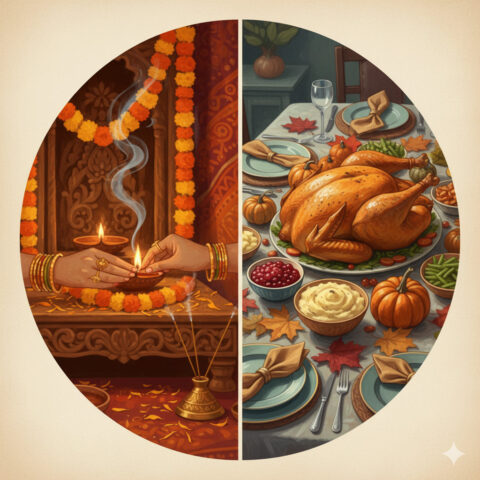
You know that feeling, right? As September turns to October, the light changes. The air gets a certain crispness. In the West, pumpkins appear on doorsteps and thoughts turn to costumes and turkey. But in Indian homes, a different energy stirs. The sound of garba music floats from community grounds, and the scent of incense is a little stronger. This is the time of Navratri nine nights significance vs western fall festivals.
It’s a natural thing to wonder. Why do these celebrations, happening at the same time of year, feel so utterly different? The answer, from a Vedic astrology perspective, isn’t about which is better. It’s about understanding two beautiful, distinct ways humanity aligns with the cosmic shift of the autumn equinox.
The Cosmic Stage: The Autumn Equinox
First, let’s set the stage. Around September 22nd, the Sun moves into the zodiac sign of Libra, marking the autumn equinox. For a brief moment, day and night are perfectly balanced. But then, the scales tip. The Northern Hemisphere begins its descent into the darker, colder, and more introspective half of the year.
Vedic astrology, or Jyotish, sees this as a profoundly powerful time. The cosmic energies are in flux, making it a potent portal for spiritual work. This is the precise window chosen for Sharad Navratri, the most significant of the four Navratris. It’s no accident. The universe itself is inviting us to turn inward.
The Vedic Astrology of Navratri: A Nine-Night Inner Journey
So, what is the spiritual meaning of Navratri’s nine nights? This is where the magic unfolds. Navratri is far more than a festival; it’s a meticulously designed spiritual technology.
The nine nights represent the three fundamental qualities of nature, or gunas: Tamas (inertia), Rajas (activity), and Sattva (purity). The journey is a progressive cleanse.
- Nights 1-3 (Goddess Durga – Destroying Tamas): We start by invoking Goddess Durga. This phase is about destroying inner demons—laziness, negativity, and ignorance. It’s the spiritual equivalent of cleaning your house from top to bottom.
- Nights 4-6 (Goddess Lakshmi – Cultivating Rajas): With a cleansed foundation, we invite Goddess Lakshmi. This isn’t just about material wealth. It’s about cultivating virtuous power, prosperity of the soul, and positive energy to achieve our goals.
- Nights 7-9 (Goddess Saraswati – Embracing Sattva): The final phase is dedicated to Goddess Saraswati. With a purified and empowered being, we now seek wisdom, knowledge, and artistic expression. We move towards light and clarity.
The tenth day, Vijayadashami, celebrates the victory of this entire inner process—the victory of light over darkness within us.
This structured progression is why exactly nine nights are observed. It’s a complete cycle of purification, empowerment, and enlightenment, perfectly mirroring the cosmic transition happening above us.
The Western Fall Expression: Community and Harvest
Now, let’s look West. The energy here is also undeniable, but its expression is outward.
Halloween, with its ancient Celtic roots in Samhain, acknowledges the “thinning veil” between worlds. It recognizes the shift into darkness, but its modern expression is external—through costumes, community gatherings, and confronting fear with fun. The focus is playful, not penitent.
Thanksgiving is a harvest festival at heart. It’s a beautiful, horizontal celebration of gratitude for the earth’s bounty, shared with family and community through feasting. The gratitude is outward, for the tangible blessings on the table.
The tone of these Western fall festivals is largely secular and communal. They celebrate the harvest home supper and the joy of togetherness. They are about embracing the season’s change in a social context.
Navratri vs. Western Festivals: A Comparative Lens
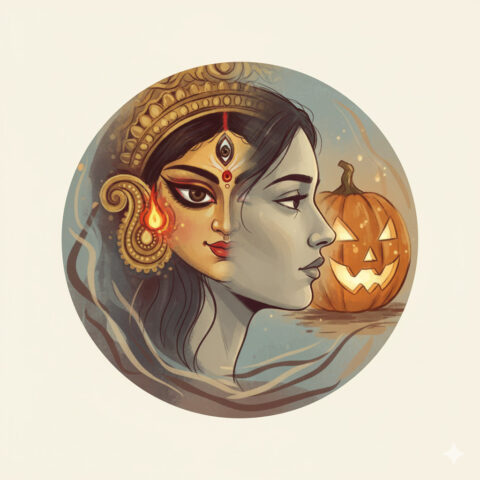
Think of it like this:
- Navratri’s Focus: Inward, spiritual, vertical (connecting to the Divine).
- Western Festivals’ Focus: Outward, cultural, horizontal (connecting to community).
One is a sacred, personal journey of spiritual introspection. The other is a secular, communal celebration of seasonal gratitude and cultural symbolism. One seeks victory over the inner self; the other celebrates the outer world’s abundance.
This is the core of the navratri nine nights significance vs western fall festivals discussion. It’s not a competition. It’s a fascinating contrast in how cultures channel the same seasonal energy.
Weaving the Tapestry Together: A Cross-Cultural Celebration
The beauty of our modern, connected world is that we don’t have to choose. You can absolutely enjoy the fun of trick-or-treating with kids and the warmth of a Thanksgiving meal while also honoring the deep spiritual call of Navratri.
Perhaps you can light a diya each night for reflection. Maybe you choose to meditate for a few minutes or simply contemplate the qualities of each Goddess. You can practice gratitude for both your material abundance (Lakshmi) and your knowledge (Saraswati). This is the practical guide to a cross-cultural fall festival season—honoring both community and your inner universe.
Answers to Your Burning Questions (FAQs)
You might still have some specific questions. Let’s tackle them head-on.
1. What is the spiritual meaning of Navratri’s nine nights and why are they observed in autumn?
It’s a spiritual journey of self-purification aligned with the cosmic energy of the autumn equinox, a potent time for inner work according to Vedic astrology.
2. How do Navratri’s nine nights compare with Western fall festivals like Halloween and Thanksgiving?
Navratri is an inward, spiritual introspection focused on the divine feminine (Shakti), while Western festivals are outward, communal celebrations focused on harvest and community.
3. Why exactly nine nights? The tamas–rajas–sattva progression explained.
The nine nights represent the systematic spiritual process of destroying impurities (Tamas), acquiring positive energy (Rajas), and ultimately gaining wisdom (Sattva).
4. What are the nine forms of Durga worshiped each day and their specific significance?
Each form of Navadurga, from Shailaputri to Siddhidatri, represents a specific divine energy and spiritual lesson, guiding the devotee through the complete transformative journey.
5. Is Navratri a harvest festival? Cultural and agrarian significance across India.
While it coincides with the harvest season, its primary significance is spiritual. However, the agrarian connection is seen in rituals and regional variations celebrating the harvest.
6. Sharad Navratri vs Chaitra Navratri: which is in fall and how do they differ?
Sharad Navratri is the autumn festival observed in Ashvin (September-October). Chaitra Navratri is in spring; both are spiritually significant but Sharad is grander in scale.
7. Navratri vs Durga Puja: overlapping dates, different emphases.
They share the same first nine days. Navratri is a nine-night festival observed across India, while Durga Puja, huge in Bengal, culminates in the immersion (visarjan) of the Goddess on the tenth day.
8. How are colors, fasting, and daily practices structured through the nine nights?
Each day has a associated color, specific prayers for a form of Durga, and practices like vegetarian fasting or Garba dance, all designed to align with that day’s energy.
9. What lessons about light vs darkness appear in Navratri compared with Halloween’s themes?
Both acknowledge the struggle. Navratri focuses on an internal, spiritual victory of light (goodness) over darkness (ignorance). Halloween often playfully externalizes and confronts darkness and fear.
10. Practical guide: framing a cross‑cultural fall festival post (Navratri, Halloween, Thanksgiving).
Embrace all aspects. Enjoy the external fun and feasting of Western traditions while dedicating time for the internal reflection, prayer, and celebration of divine energy offered by Navratri.
Your Personal Cosmic Alignment
This time of year is a gift. The cosmos provides a unique opportunity. It’s a chance to celebrate outwardly with those you love, and to nourish your spirit inwardly. Understanding the navratri nine nights significance vs western fall festivals allows you to engage with both worlds fully and consciously.
But here’s the thing. While the general energy is for everyone, your personal journey is unique. Your birth chart is a map of your soul’s karma and potential. How will these planetary shifts affect you personally? Which form of the Divine Feminine should you connect with most deeply for maximum growth this season?
This is where general knowledge meets personal transformation.
The messages of the planets are specific. Your chart holds the key. Maybe this Navratri is your time to break a specific pattern (Tamas). Perhaps it’s about attracting a new flow of abundance (Rajas). Or it could be about finally gaining clarity on a lifelong question (Sattva).
You don’t have to navigate this powerful time alone.
Let’s unlock your path together. Book a personalized Vedic astrology consultation now. We’ll dive into your unique chart and craft a Navratri practice that aligns perfectly with your destiny. Let’s turn this cosmic shift into your personal victory.
Your inner light is waiting to triumph.
[Book a Consultation]